Growth-stage nutrition: how to achieve strong plants without deficiencies
Ionic balance and growth physiology
Traditionally, growth is associated only with Nitrogen (N). Although it is the driver of chlorophyll and protein synthesis, a professional plant requires a precise balance of cations and anions to maintain turgor pressure and cell division.
In high-intensity lighting systems (LED), the demand for Magnesium (Mg) and Calcium (Ca) increases sharply. Calcium is an immobile element that forms cell walls; if it is lacking in the apex, the structure collapses. Magnesium is the heart of the chlorophyll molecule. Without a balanced Ca:Mg ratio, the plant cannot process the photons you send it, generating saturation that leads to chlorosis.
The importance of Silicon and internodal structure during growth
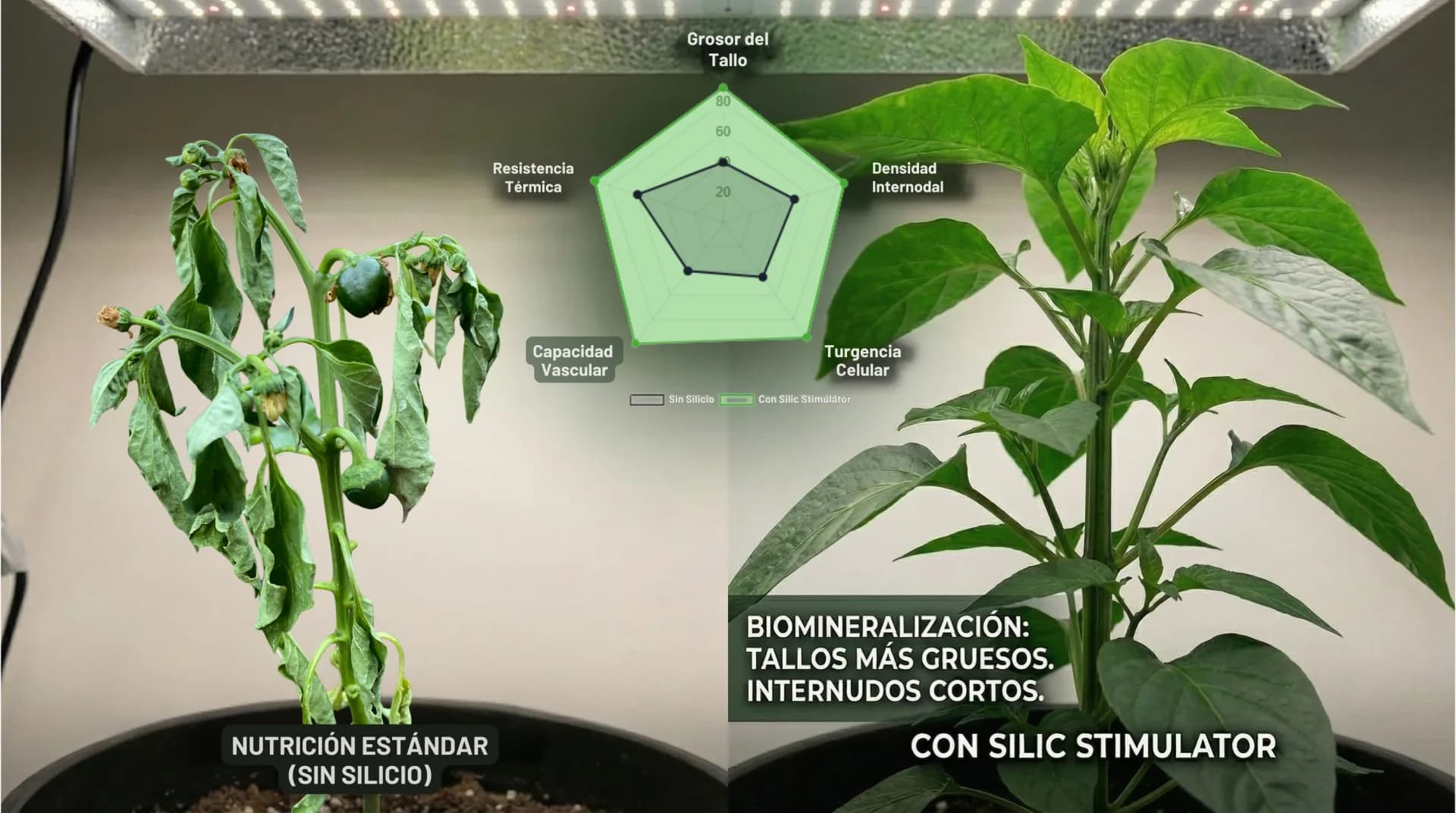
To avoid stretched plants and brittle stems, the key is not only lowering the light; it is biomineralisation. The use of Silicon mechanically reinforces cell walls, creating an "armour" that reduces excessive transpiration and increases stress resistance.
- Thicker stems: They allow wider xylem and phloem, which means greater nutrient flow towards future flowers.
- Short internodes: Balanced nutrition prevents unwanted stretching, allowing more efficient light penetration into the canopy.
Applied indoor physiology: the CO₂ Effect without gas tanks
Indoors, the limiting factor is usually the carbon assimilation rate. This is where technical nutrition makes the difference. Through the use of systemic-action biostimulants such as CO₂ Effect, we can induce the plant into a state of high metabolic activity.
By stimulating nutrient transport from the root to the leaves, we increase internal conductivity. This allows the plant to withstand a higher EC without dehydrating, transforming water and minerals into heavy plant mass much more efficiently than with conventional fertilisation.
Expert note
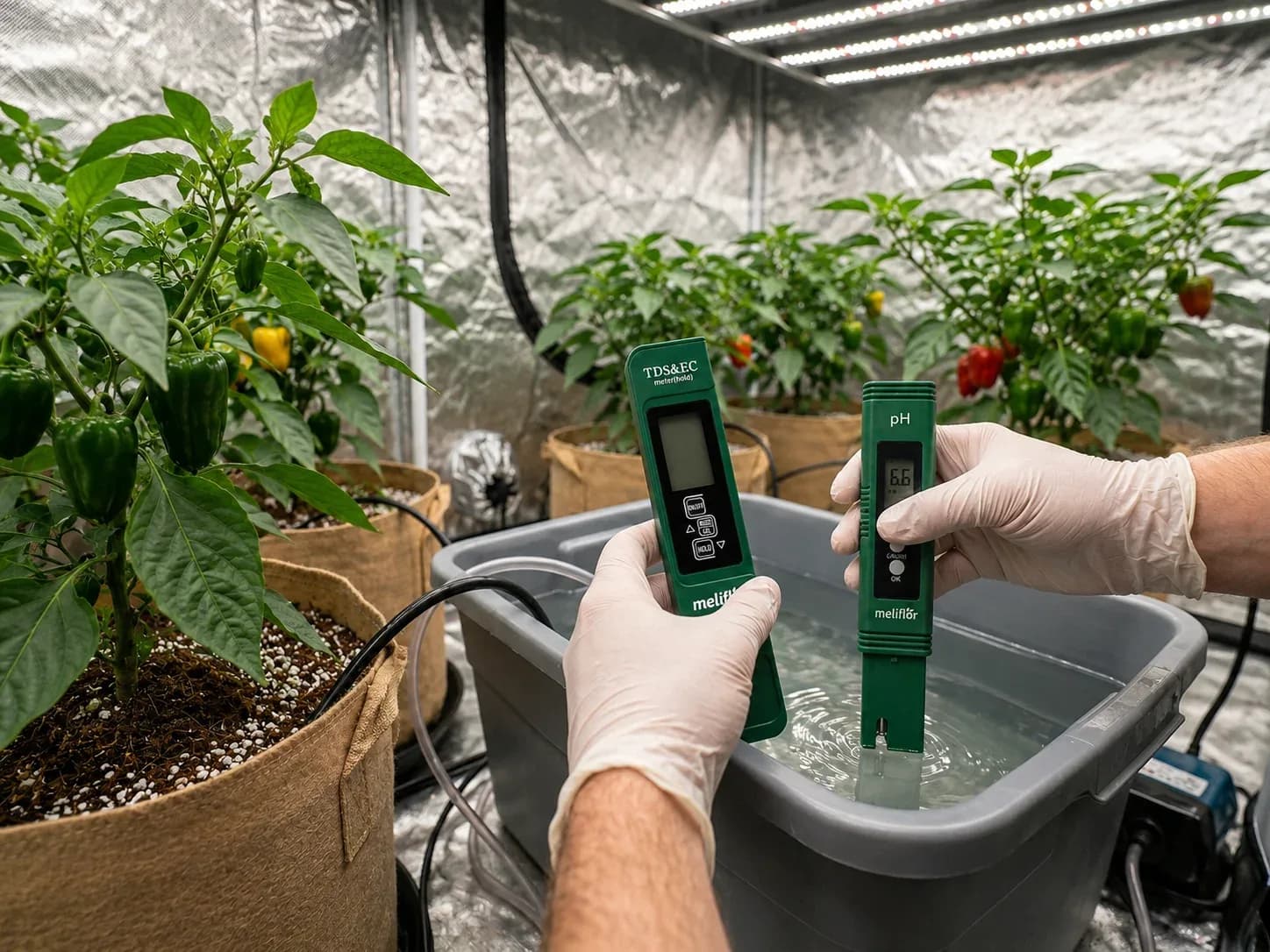
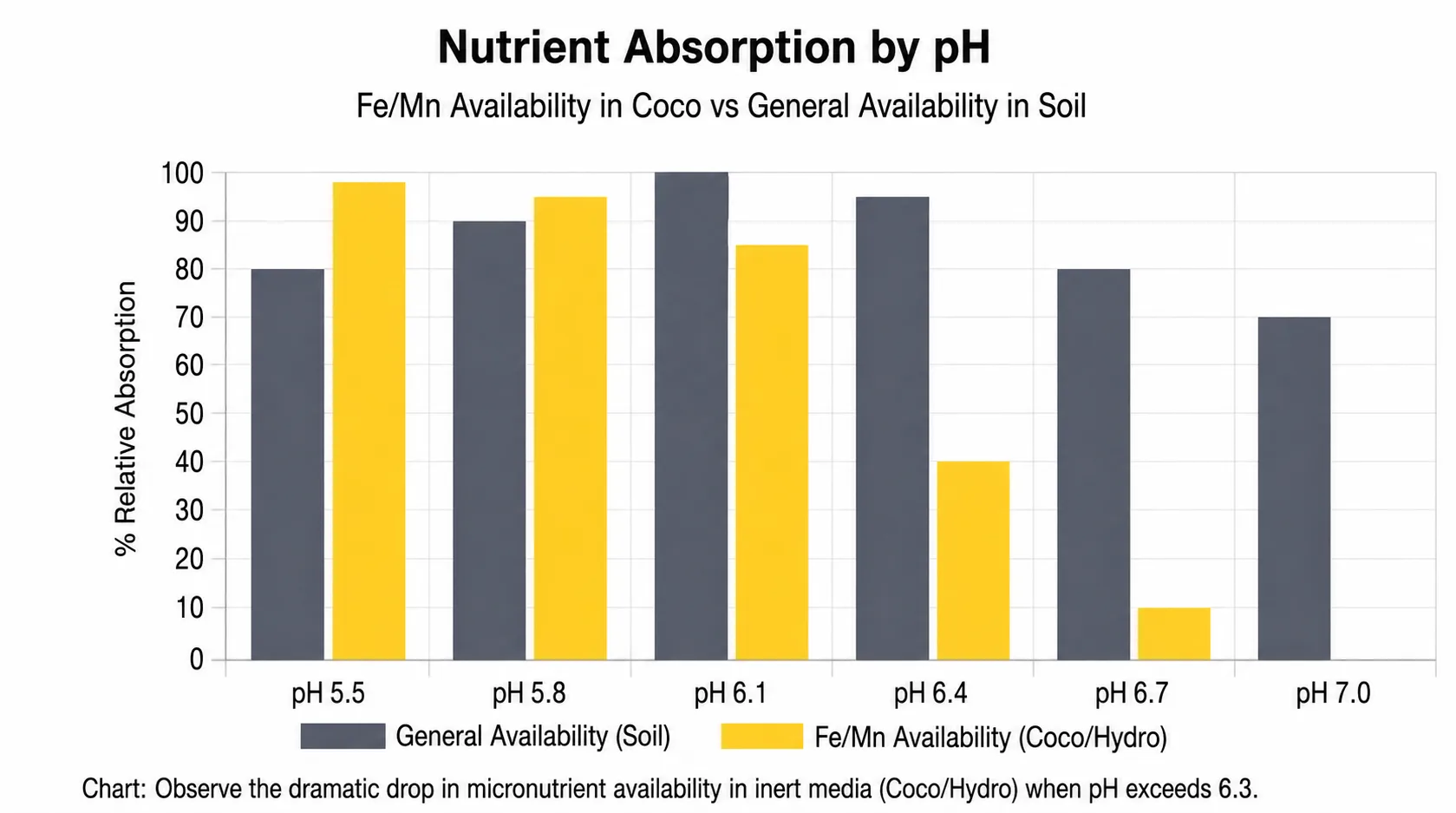
In coco and hydroponics, the cation exchange capacity (CEC) is almost zero or very controlled. Here, formulation precision is non-negotiable. A pH error blocks Iron or Manganese within hours.
Intelligent crop simplification: the Nano 1 concept
As advocates of efficiency, we understand that the professional grower wants results, not complications. The philosophy of Nano 1 is based on this principle: an All-in-One formula that integrates fast-assimilation nitric nitrogen, the Calcium and Magnesium needed for LED, and chelated micronutrients in powerful nanoparticles that guarantee total availability across a wide pH range.
By using a base such as Nano 1, we eliminate the ionic competition that occurs when mixing three or four different bottles from different brands. It is zero-residue vegan nutrition that keeps the substrate clean and the root white.
Quick tips for professional growth
- Control VPD (Vapour Pressure Deficit):
It is the difference between the amount of moisture the air can hold and the amount it actually contains.
- If it is too low (very humid environment), the stomata close.
- If it is too high (very dry environment), the plant protects itself by closing them.
→ In both cases, metabolism stops.
- Root oxygenation:
Ensure drying cycles in the substrate. Roots need oxygen to metabolise nutrients.
- Preventive Silicon:
Apply it from the first week of vegetative growth to create a solid structural base.
- Progressive EC adjustment:
Start at 0.8–1.0 and increase according to the plant’s response. → Downward-curled leaves = excess.
- System hygiene:
In hydroponics, Nano 1 prevents salt and sediment build-up, keeping lines and drippers clean.